How Proper HVAC Maintenance Reduces Energy Consumption
Heating, ventilation, and air conditioning (HVAC) systems play an important role in maintaining comfortable indoor temperatures and healthy air circulation. However, HVAC equipment can consume a significant amount of energy, especially when it operates for long hours. Without regular maintenance, the system may work harder than necessary, increasing energy use and utility costs.
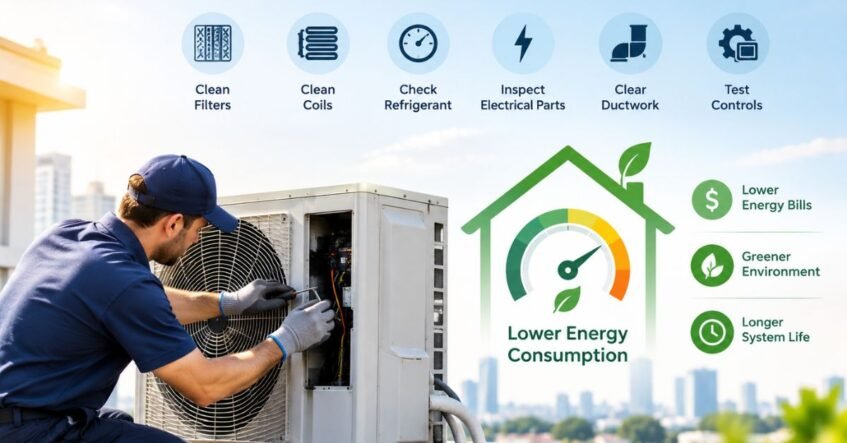
Proper HVAC maintenance helps keep equipment operating efficiently, reduces unnecessary energy consumption, and supports reliable performance. From cleaning filters to checking system components, small maintenance tasks can make a noticeable difference in overall energy efficiency. Regular Duct Cleaning Services in Melbourne can also help remove accumulated dust and debris from ductwork, allowing air to move more efficiently through the system and reducing the strain on HVAC equipment.
Clean Air Filters Improve Airflow
Air filters collect dust, dirt, pollen, and other airborne particles before they enter the HVAC system. Over time, these particles can build up and restrict airflow. When airflow is reduced, the system needs to operate for longer periods to reach the desired indoor temperature.
Replacing or cleaning air filters at recommended intervals allows air to move more freely through the system. Better airflow reduces strain on the blower and other components, helping the HVAC unit maintain comfortable temperatures without using excessive energy.
The frequency of filter replacement depends on factors such as system usage, indoor air quality, and the type of filter installed. Regular inspections can help identify when a filter needs attention.
Maintain Efficient Cooling and Heating
HVAC systems depend on several components working together to transfer heat effectively. Dirty coils, blocked vents, damaged components, or poor airflow can reduce this efficiency.
For cooling systems, dirty evaporator and condenser coils can make heat transfer more difficult. The system may then run longer to provide the same level of cooling. Cleaning these components helps improve heat exchange and allows the equipment to operate more efficiently.
During heating operation, similar issues can affect performance. Professional maintenance helps identify problems that may cause the system to consume more energy than necessary.
Check Refrigerant Levels
For air conditioning and heat pump systems, the correct refrigerant level is essential for efficient operation. If refrigerant is too low because of a leak or another issue, the system may struggle to remove heat from indoor spaces.
This can result in longer operating cycles and increased electricity consumption. A qualified HVAC technician can inspect the system, identify potential leaks, and check whether refrigerant levels are within the manufacturer’s recommended range.
Simply adding refrigerant without identifying the underlying problem may not solve the issue. Proper inspection is important for maintaining long-term system efficiency.
Keep Outdoor Units Clear
Outdoor HVAC units require adequate airflow to release heat effectively. Leaves, dirt, grass, debris, and other obstructions around the outdoor unit can restrict airflow and reduce performance.
Keeping the surrounding area clean and providing sufficient clearance allows the condenser to operate more effectively. This simple maintenance step can help reduce the workload placed on the compressor and support more efficient cooling.
Outdoor units should also be inspected periodically for dirt buildup and physical damage. Professional servicing can address issues that may not be visible during a basic inspection.
Inspect Ductwork for Air Loss
In central HVAC systems, ductwork carries conditioned air throughout the building. Leaks, gaps, damaged insulation, or poorly connected ducts can allow heated or cooled air to escape before reaching the intended rooms.
When this happens, the HVAC system may need to run longer to maintain the selected temperature. Sealing duct leaks and improving insulation can help deliver more conditioned air where it is needed.
A professional duct inspection can identify areas where air is being lost and determine whether sealing or insulation improvements are required.
Maintain Thermostats and Controls
Thermostats control when an HVAC system starts, stops, heats, or cools. If a thermostat is inaccurate or poorly positioned, it may cause the system to operate unnecessarily.
Checking thermostat performance and ensuring it is installed in a suitable location can improve temperature control. Programmable or smart thermostats can also help manage operating schedules by adjusting temperatures when spaces are occupied or unoccupied.
Using appropriate temperature settings rather than constantly changing the thermostat can further support efficient system operation.
Identify Small Problems Before They Become Major Issues
Minor HVAC problems can gradually increase energy consumption. A worn belt, unusual electrical issue, blocked drain, faulty sensor, or abnormal component operation may cause the equipment to work harder.
Regular inspections provide an opportunity to detect these problems early. Addressing them before they develop into larger faults can help maintain system efficiency and reduce unexpected repair costs.
Preventive maintenance is generally more effective than waiting until an HVAC system stops working completely.
Extend Equipment Life
Energy efficiency is closely connected to equipment condition. An HVAC system that is regularly cleaned, inspected, and serviced is more likely to operate smoothly over its expected service life.
When components remain in good condition, the system can maintain its designed performance for longer. This may reduce the need for premature replacement and help businesses and homeowners get more value from their HVAC investment.
Support Lower Energy Costs
A well-maintained HVAC system does not have to work harder than necessary to provide heating or cooling. Improved airflow, clean components, proper refrigerant levels, efficient ductwork, and accurate controls can all contribute to better energy performance.
Although maintenance cannot eliminate energy consumption, it can reduce avoidable energy use caused by neglected equipment. Over time, these efficiency improvements can contribute to lower utility expenses.
Conclusion
Proper HVAC maintenance is an important part of managing energy consumption and maintaining indoor comfort. Simple tasks such as replacing filters and clearing outdoor units, combined with professional inspections of coils, refrigerant, electrical components, ductwork, and controls, can help an HVAC system operate more efficiently. For properties requiring reliable heating solutions, Ducted Gas Heating Installation in Melbourne can also provide efficient and consistent warmth when the system is properly installed and maintained.
Instead of waiting for performance problems or unexpected breakdowns, regular preventive maintenance keeps the system in better working condition. A consistent maintenance schedule can support reliable heating and cooling, reduce unnecessary energy use, control operating costs, and extend the useful life of HVAC equipment.